
How to Convince Your Boss to Try a Kanban Pull-Based Workflow
· Wim Kerkhoff · Leadership

You know the workflow is broken. Your service coordinator spends 10 hours a week shuffling calendars. Projects that should take two weeks take three every single time. Half your team is drowning while the other half is looking for work. Tickets sit in “New” for days because nobody knows who should grab them.
But when you try to explain this to your CEO or COO, it comes out sounding like: “We should adopt Agile Kanban methodology with WIP limits and pull-based flow.” And their eyes glaze over. Or worse, they say “Kanban? Isn’t that just sticky notes?” and move on to the next fire.
Here’s the problem: You’re living the chaos. But, they’re looking at the numbers. You need to speak their language.
What You’re Actually Fighting Against
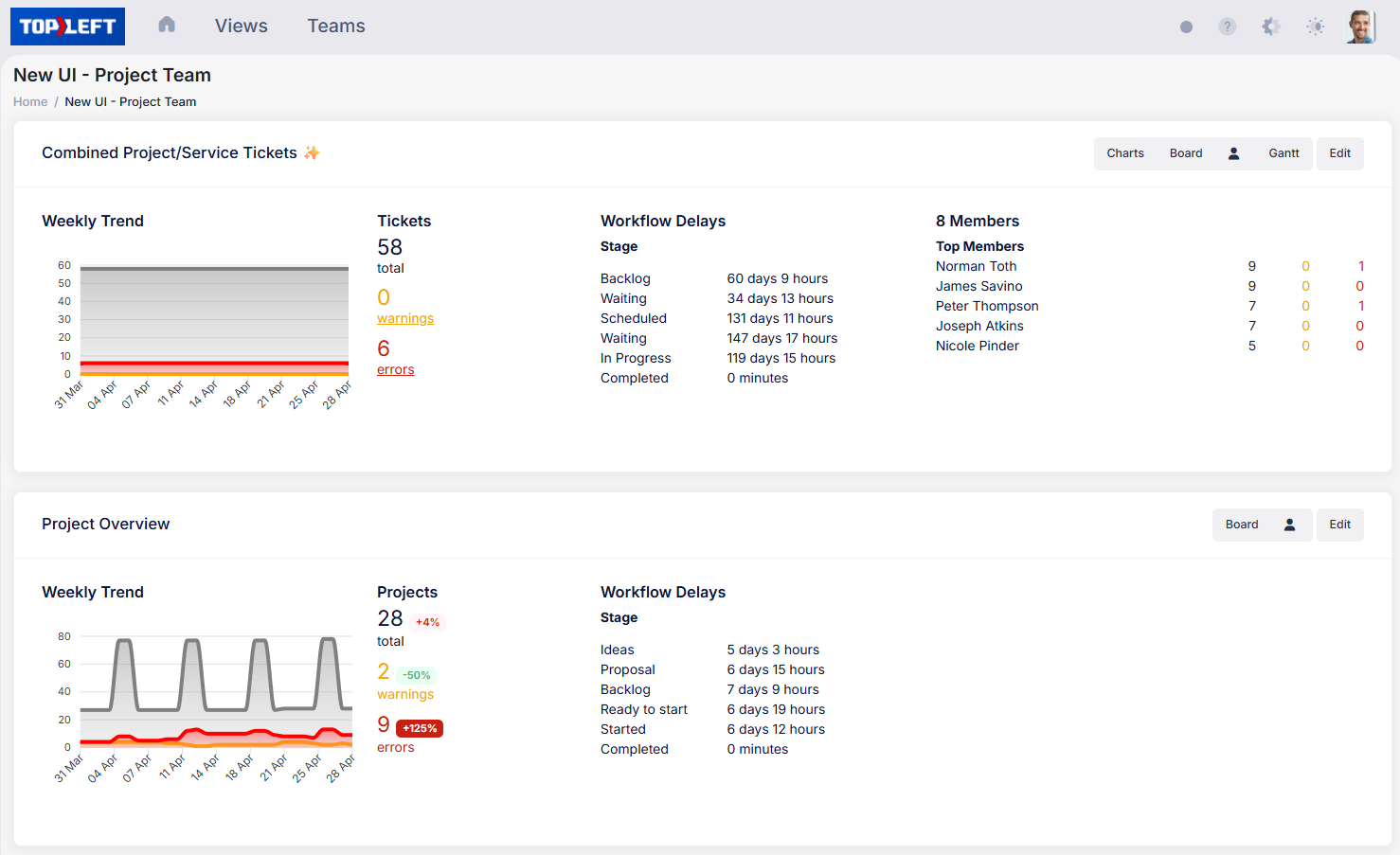
Stop saying “push-based scheduling” or “waterfall delays.” Your boss has no idea what that means. Here’s what’s actually happening:
Your service coordinator is playing a human Tetris game. They spend hours every week moving people around on calendars, trying to fit new urgent work into schedules that were full yesterday. Every time a priority shifts or someone calls in sick, they start over. That’s 10-20 hours per week of pure overhead, which is time you’re not billing for.
Projects always run 30%+ over timeline. Not because your team is slow, but because you assign work before anyone’s ready for it. Engineers start tickets, get interrupted by something urgent, switch back, lose context, and waste another 15 minutes getting back up to speed. Every switch costs you. Do that five times a day across a team of ten people, and you’ve lost 12 billable hours every day, minimum.
Nobody knows what’s actually happening. You have dashboards in your PSA. You have reports. You have status meetings. But none of that tells you why this ticket has been touched by four different people, or why that project is stuck in review for the third week, or who’s actually overloaded versus who’s just busy looking.
That’s what you’re fighting. Not “waterfall methodology”, but wasted time, missed billable hours, and invisible bottlenecks.
Why “Just Use a Board” Doesn’t Work
Your boss might say: “So use Trello. Or Microsoft Planner. We already have that and its free.”
Here’s why that fails: Double entry kills adoption.
You need engineers to update tickets in ConnectWise or ServiceNow or HaloPSA. That’s where time entry happens, where client communication lives, where billing comes from. Now you want them to also drag cards around on a Trello board? It’ll last two weeks before everyone quietly stops using the board and goes back to the PSA.
Plus, none of those generic board tools sync time entries back to your PSA. So even if people use the board, you still have the “where are my timesheets?” conversation every Friday.
This is why most teams who try Kanban with free tools give up after a month. Not because Kanban doesn’t work because the tools don’t integrate with reality.
The Pilot That Actually Works
Here’s what you pitch: A two-month proof of concept using a proper PSA integration (TopLeft is built for this), focused on one team or one type of work.
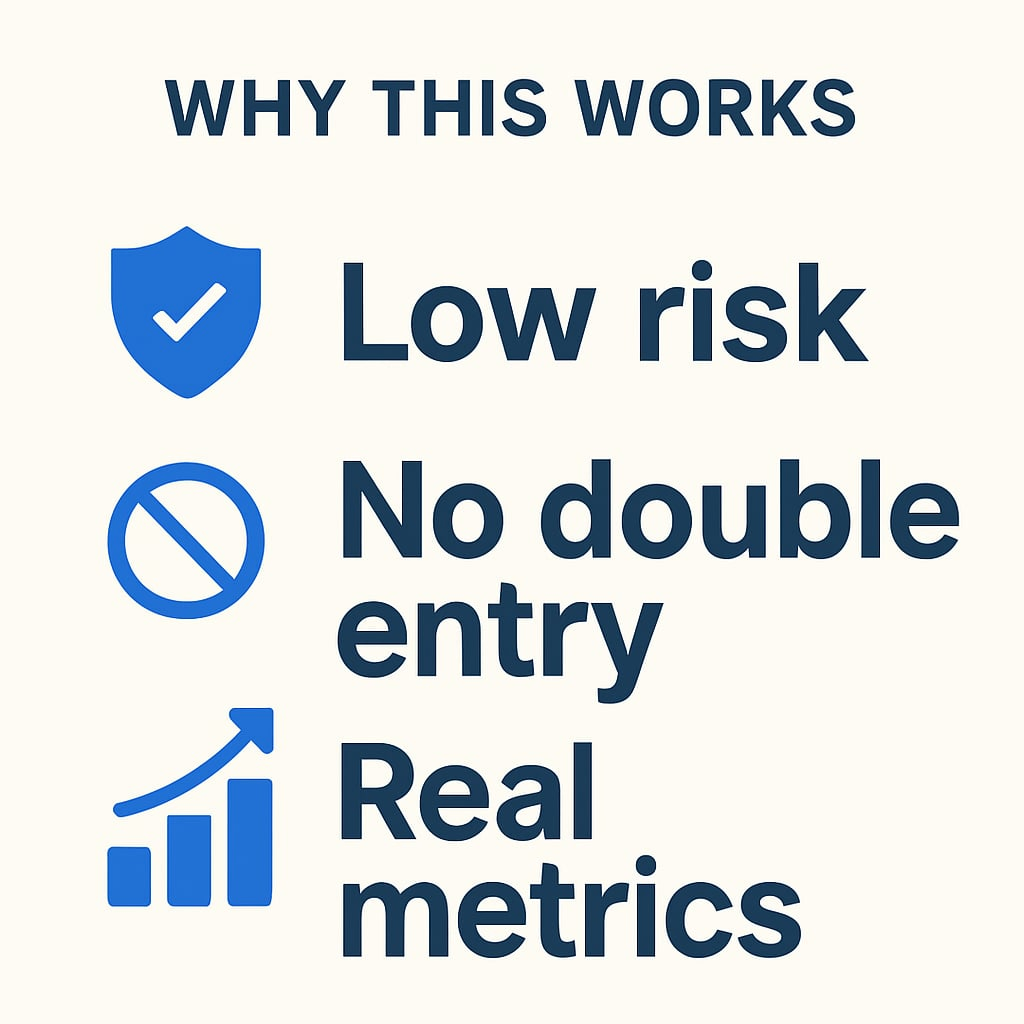
Why this works:
-
Low risk: Two months, one team, easy to stop if it’s not working
-
No double entry: Board syncs with your PSA automatically
-
Real metrics: You’ll have before/after numbers in 60 days
-
Their language: You’re not asking for “Agile transformation,” you’re asking to test whether visual workflow cuts project overruns
What you measure:
-
How long tickets sit in “New” before someone starts them (response time)
-
How long tickets take from start to done (resolution time)
-
How many tickets are in progress at once per person (context switching)
-
Billable utilization percentage (are we billing for the time we have?)
-
How many times people touch the same ticket before it’s done (rework)
Pick the three metrics your boss actually looks at. Track them now. Track them during the pilot. Show the difference.
How to Handle the Objections
“We don’t have time for this.” That’s the point. You’re spending 10-20 hours a week on coordination overhead and context switching. The pilot tests whether you can get that time back. If it doesn’t save time in 60 days, we stop.
“This will disrupt our clients.” Clients don’t see your workflow. Instead, they see response times and delivery dates. We’re testing whether a visual board helps us hit SLAs more consistently and finish projects on schedule. That improves client experience, not disrupts it.
“We can’t predict timelines without schedules.” You’re not predicting them now either. Projects run 30% over. Every time. Because the schedule doesn’t account for interruptions, priority shifts, or the fact that Sarah’s working on five things at once. The board makes those conflicts visible so you can actually manage them.
“Kanban is just sticky notes on a whiteboard.” Yeah, that’s the problem. What we’re testing is whether a board that syncs with our PSA. This means no double entry, automatic time tracking, real-time updates, which gives us better visibility than digging through ticket queues.
“What about tools like Monday or Asana?” Those work great if you don’t have a PSA. But we do. And our billing, client communication, and time tracking all live there. We need something that overlays our PSA workflow, not replaces it. That’s why the free boards don’t stick and people won’t maintain two systems.
What to Expect (Be Realistic)
Week 1-2: Feels awkward. People forget to update the board. You’re training new habits.
Week 3-4: The board starts showing you things you didn’t see before. Like how many tickets are stuck in “Review” because nobody’s assigned to review them. Or how Joe has seven things in progress while Tom has one.
Week 5-8: You start making different decisions. Instead of assigning new work when it comes in, you ask “who has capacity?” You limit how much work anyone has in progress at once. Tickets start moving faster because people finish things before starting new ones.
By week 8: You have numbers. Either response time dropped 25% and billable utilization went up 15% or it didn’t and you stop. That’s the deal.
What You’re Really Asking For
You’re not asking to “transform to Agile.” You’re asking to test whether a visual board with PSA integration reduces coordination overhead and gets projects done on time.
Two months. One team. Clear metrics. If it doesn’t work, we stop. If it does work, we have data to expand it.
Frame it that way, as a measured experiment to improve specific metrics they already care about, and you’re not the “process guy.” You’re the person running a test to see if you can get 15 hours per week back and stop missing project deadlines.
Your boss is overwhelmed and skeptical of new tools. Show them this isn’t a new tool, but it’s a view on top of the tool they already have. And it’s a two-month test, not a commitment.
That’s a pitch they can say yes to.
Starting Your Pilot
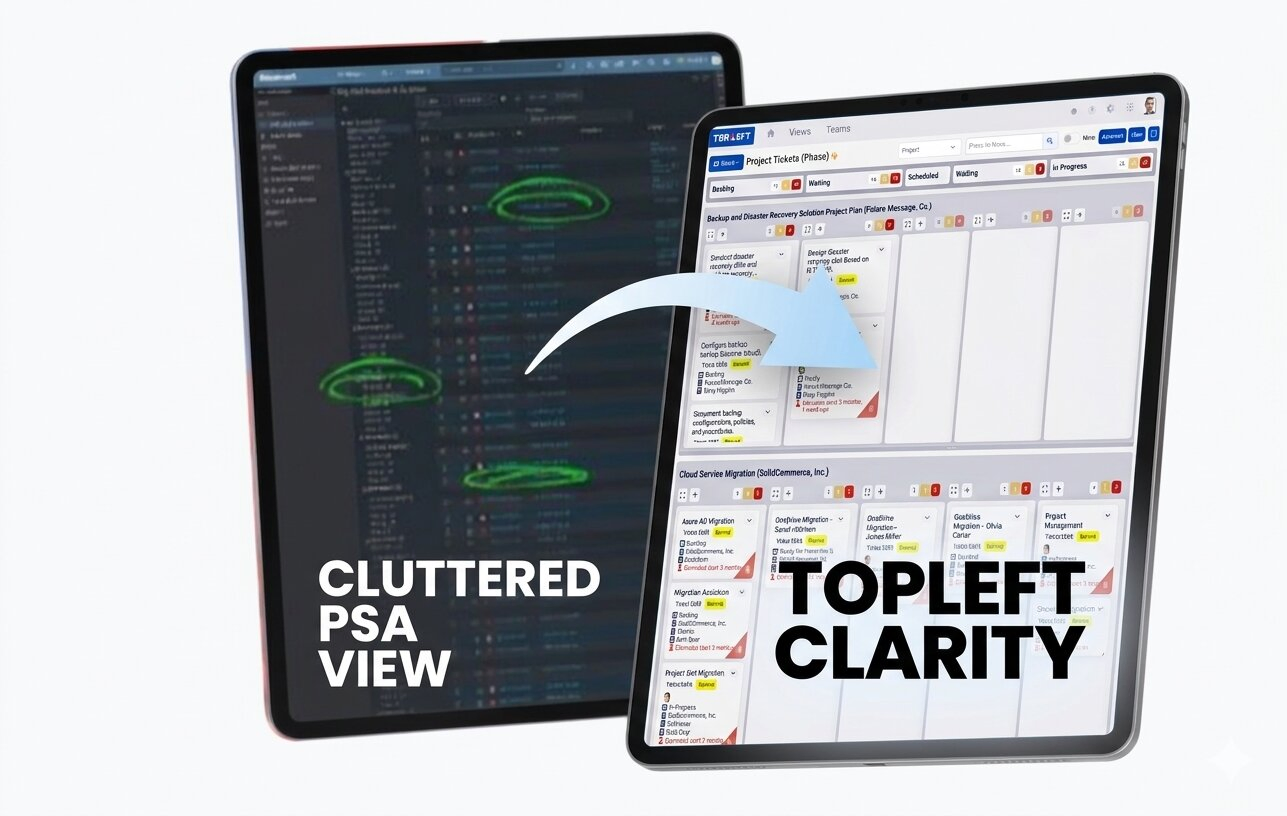
Try it free first if you want: Set up a Trello board or Microsoft Planner and see if your team will actually use it. Most teams abandon it in two weeks because of double entry.
Or skip straight to a real pilot: Use a tool built for PSA integration like TopLeft. Two-way sync means no double entry, time tracking flows automatically, and you get real data on whether this actually improves your metrics.
The difference between “Kanban sounds interesting” and “Kanban cut our project overruns by 30%” is integration. Free boards can prove the concept. PSA-integrated boards actually change the numbers.
Pick your pilot team. Set your baseline metrics. Run it for 60 days. Show your boss the before and after.
That’s how you win this conversation.